may dAY
Memphis massacre of 1866
May 1, 1866
Memphis, TENNESSEE
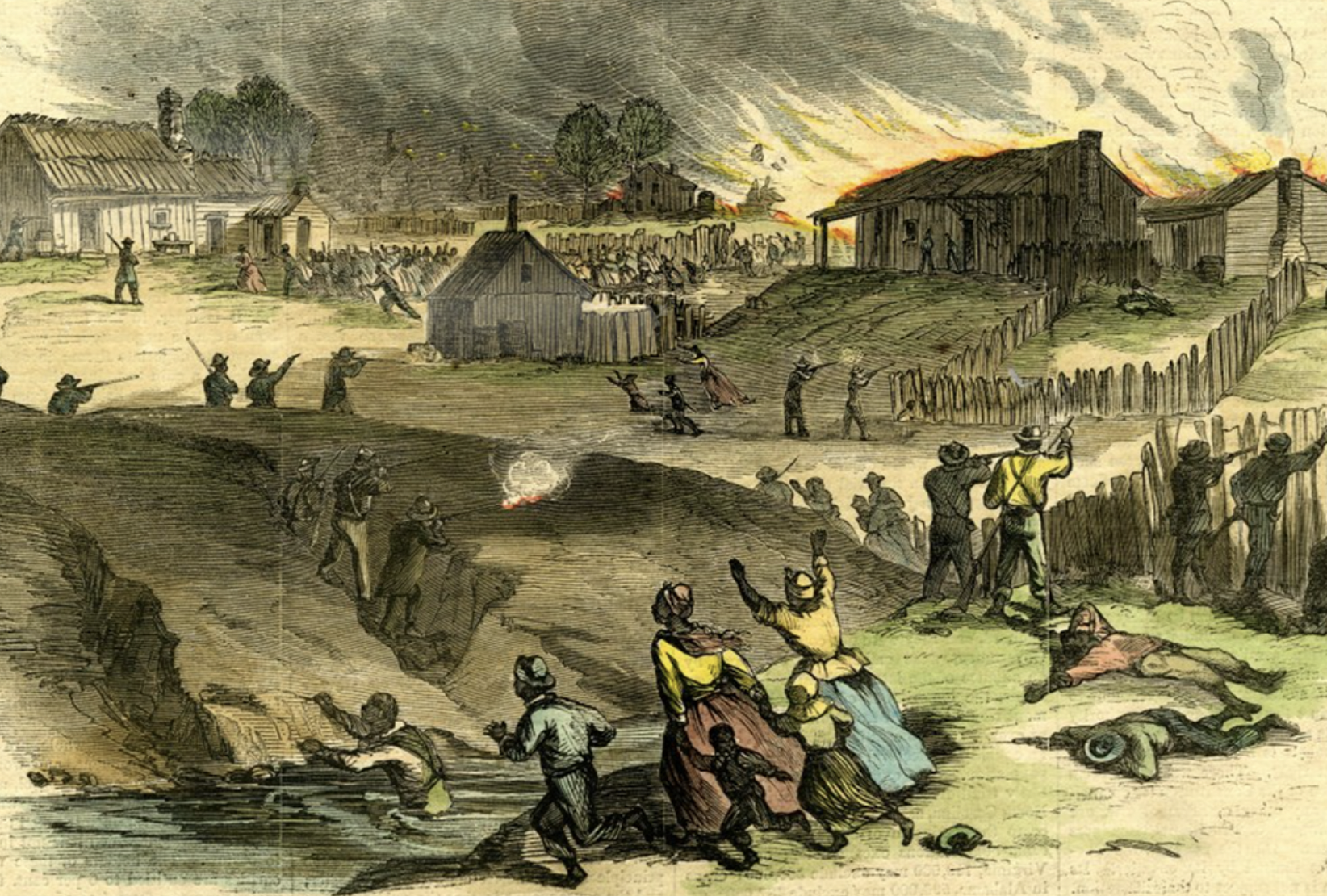
Memphis Massacre Painting.
In the months after the end of the Civil War, tensions simmer between Black Union soldiers patrolling Memphis, Tennessee, and that city’s all-white police force. On May 1st in 1866, violence explodes when police attempt to break up an impromptu street party of Black soldiers, women, and children. Police are joined by thousands of white residents, and by the next morning, Black neighborhoods are burning, an untold number of Black people are dead, and the violence continues.
On May 3rd, U.S. Army General Stoneman declares martial law and restores order. Three days of rioting have left 46 Black and 2 white people dead, as well as over 100 homes, Black schools and Black churches destroyed by fire. Over the next four years, the Black population of Memphis declines by a quarter. Today, the MPD and city are both 60% Black.
May Day riots of 1894
May 1, 1894
Cleveland, OHIO
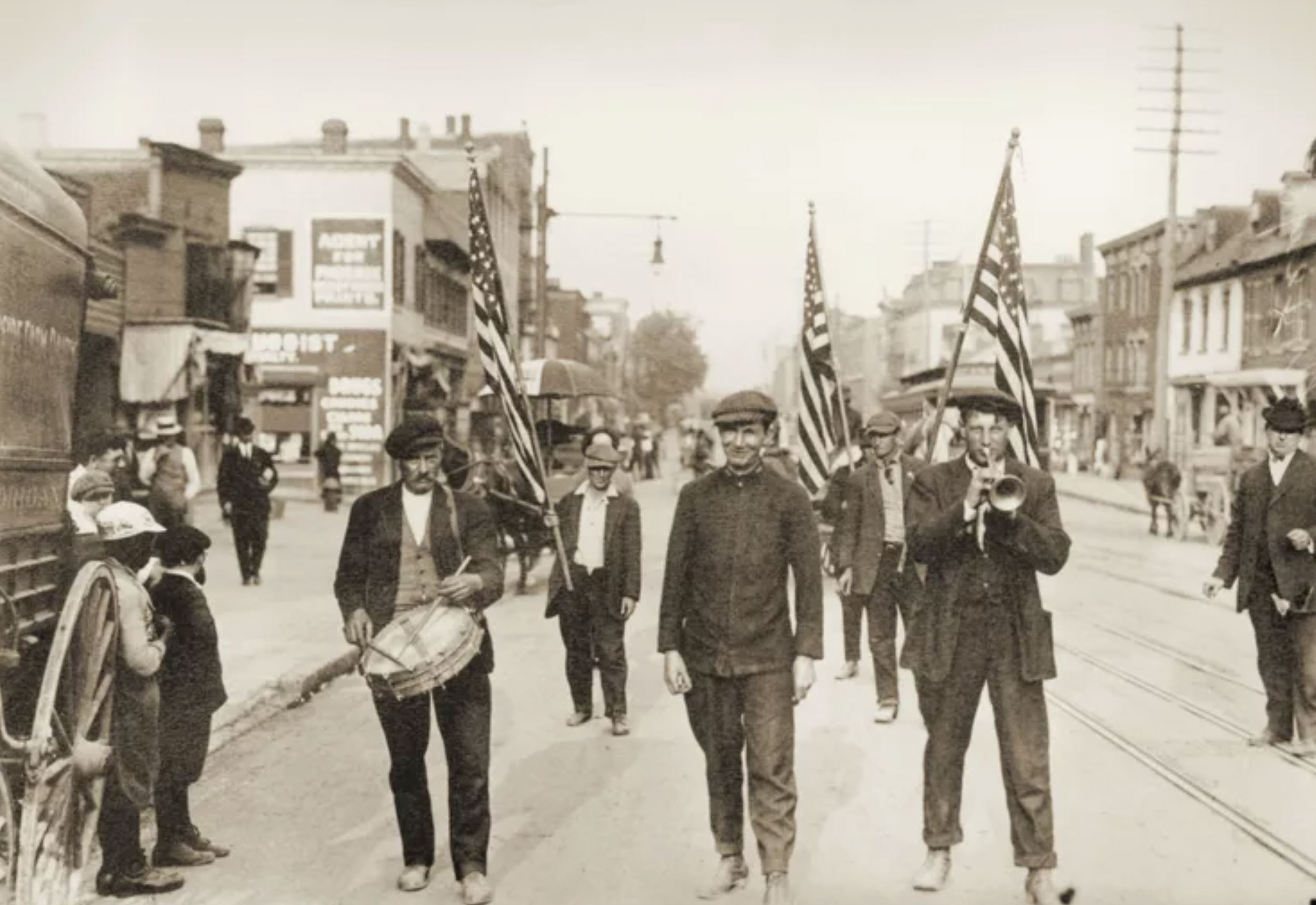
On May 1st, 1894, in the low-lying, industrial Flats of Cleveland, Ohio, where the Cuyahoga River flows into Lake Erie, at the peak of the wave of unemployment that follows the economic depression known as the Panic of 1893, a spontaneous May Day demonstration grows and becomes increasingly restless. At least 7000 people take to the streets, a decentralized mob throughout the industrial areas of town, raiding factories, swarming quarries, forcing workers to halt their work, destroying machinery, and fearlessly confronting police. They take control of one factory. Violence ensues on several fronts. Police eventually subdue the riots with clubs. No lives are lost and, to some extent, the next day, things return to normal — if very much on edge.
High unemployment persists until 1897.
May Day marchers protesting high unemployment.
May Day riots of 1919
May 1, 1919
Cleveland, OHIO
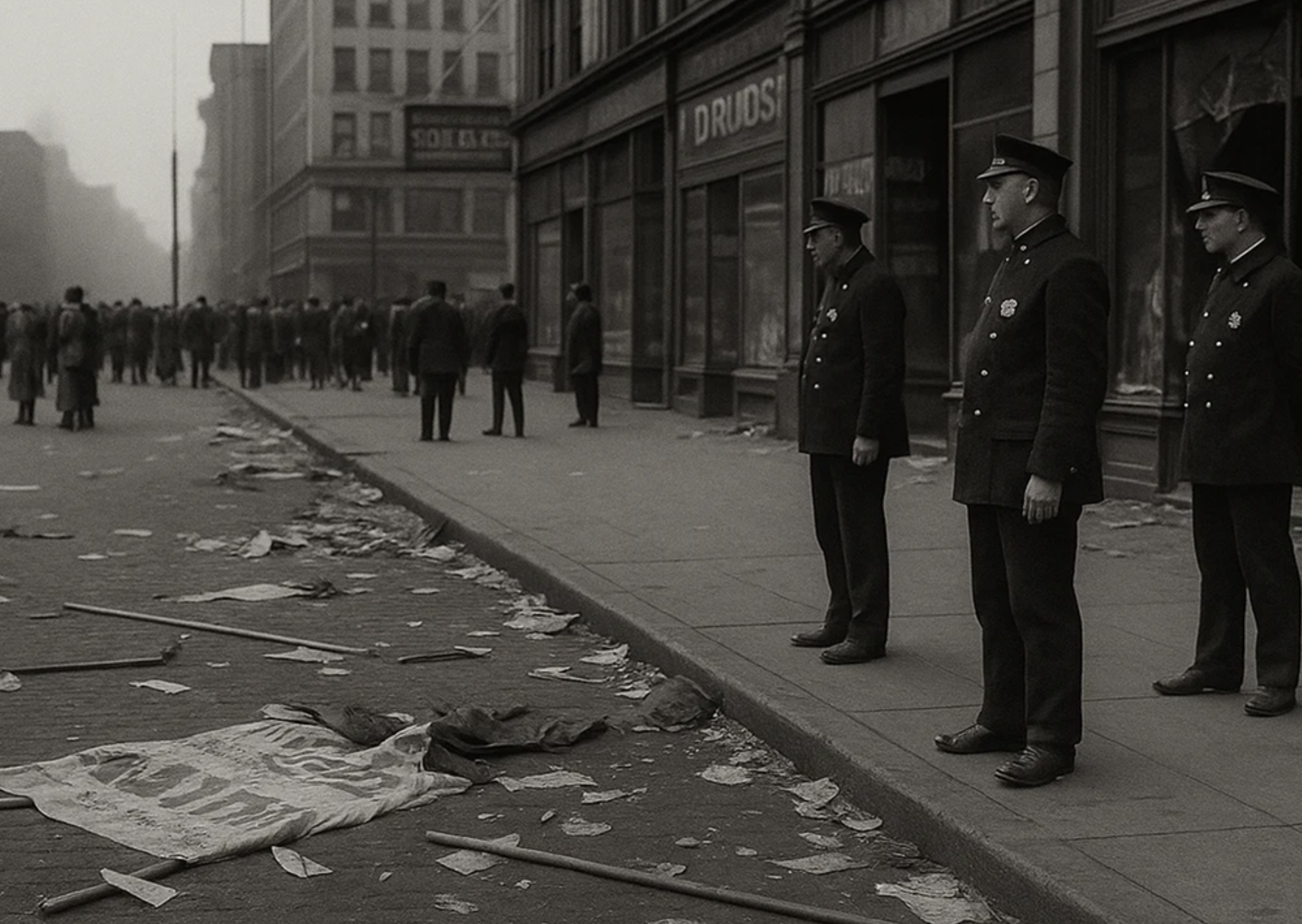
Police officers stand ready to confront rioters in Cleveland.
On this day in 1919, in Cleveland’s Central Square, a May Day parade gets violent when demonstrators — inspired by the recent Communist revolution in Russia and protesting the jailing of socialist activist, Eugene Debs — are told to lower their red flags and they refuse to do so.
Police are ordered to attack the march, and they rush the crowd, on horseback, clubbing demonstrators indiscriminately, killing two and injuring scores, including women and children. The army drives tanks — confiscated from Germany during WWI — through the streets. Police arrest 116 people.
Later in the day, soldiers, police and armed citizens raid the Cleveland Socialist Party headquarters and demolish everything, throwing typewriters, furniture, banners and flags into the street and piling it all up for a bonfire.
Nationwide student anti-war strike of 1970
May 1, 1970
nationwide
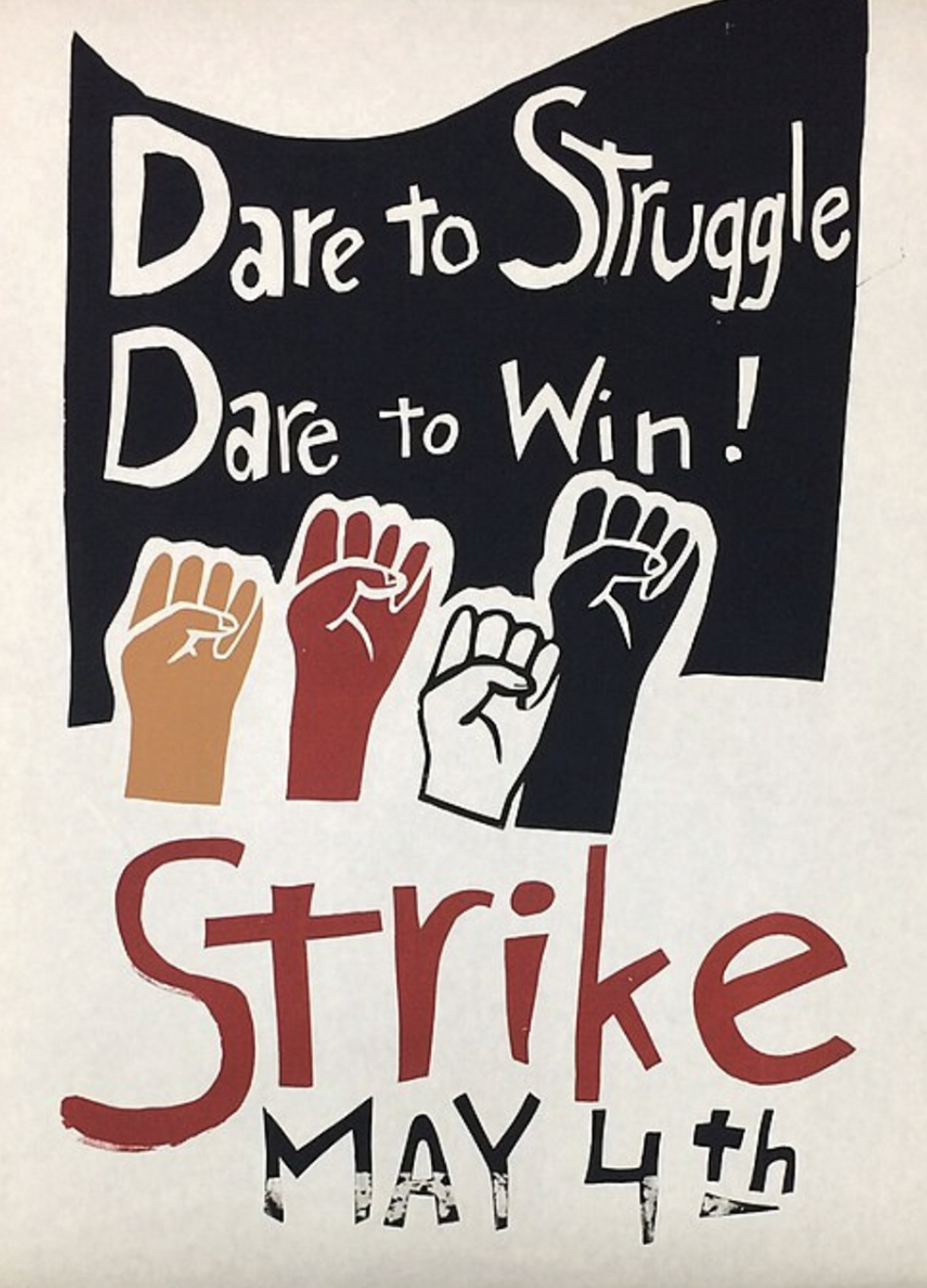
High school and college students walk out of class at over 900 campuses on this day in 1970, to protest the Nixon administration’s expansion of the Vietnam War. The next day, students at Kent State University, in the rolling hills of northeastern Ohio, along the Cuyahoga River, burn down the campus ROTC building. On May 4, National Guardsmen at Kent open fire on protesters, killing four and injuring nine.
Nationwide, protests grow in size, energy, and violence. 30 ROTC buildings are set on fire at campuses across the country. Students at New York University hang a banner that says, "They Can't Kill Us All." Conservatives fear insurrection. Nixon unsuccessfully meets with protesters in D.C., and later claims they are pawns of foreign communists.
The U.S. withdraws from Vietnam in 1973.
Poster advertising the student strike.
Great American Boycott (A Day Without Immigrants)
May 1, 2006
nationwide
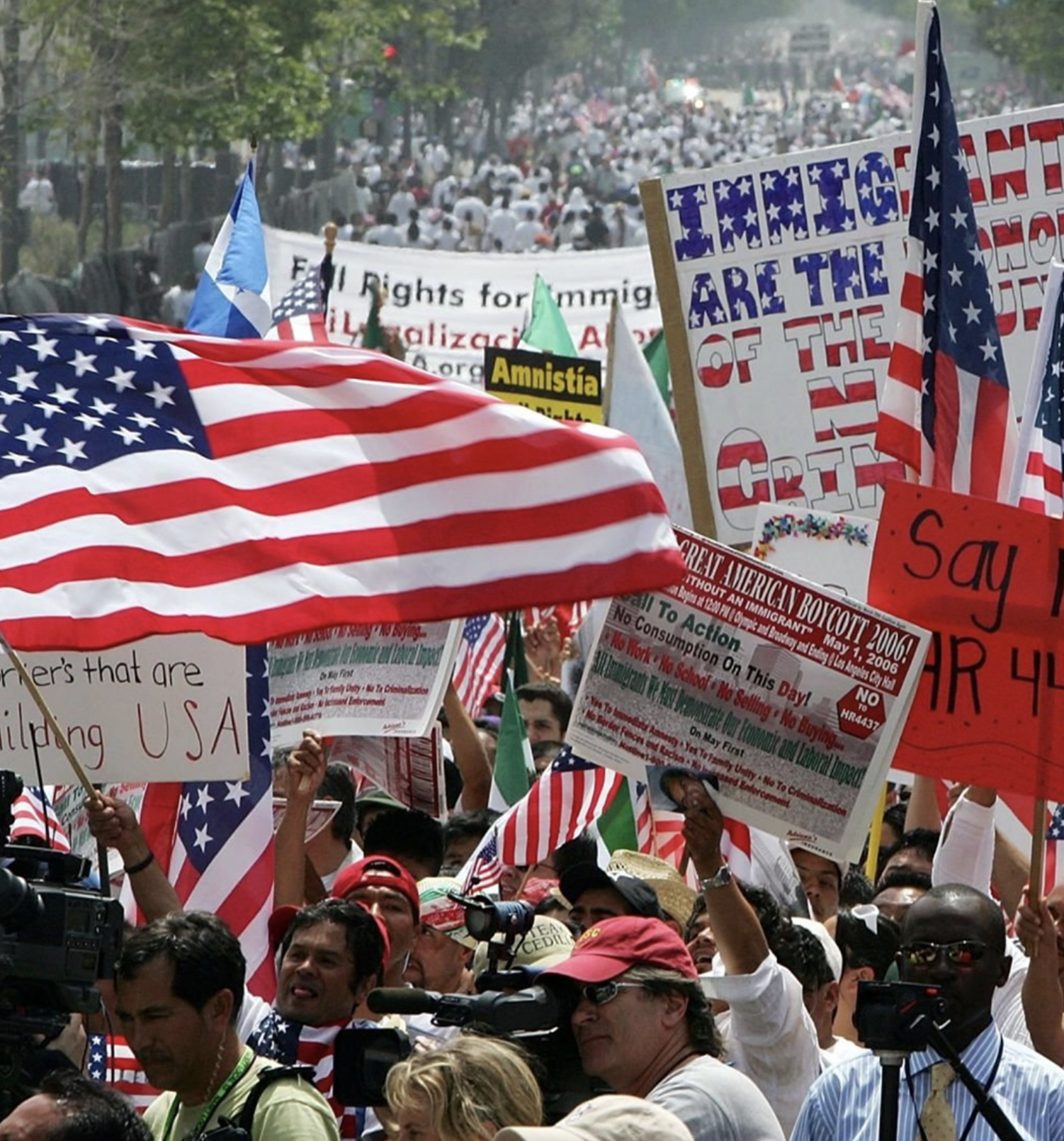
Across the nation, immigrants and their supporters rally through marches, protests, and boycotts to underscore the role of immigrant communities in American society.
Immigrants stage a nationwide boycott of work, school and commerce on May 1st in 2006, to demonstrate their economic and cultural contributions to the United States. Millions rally and march in cities across the U.S., demanding amnesty and legalization programs for illegal immigrants. Some businesses close in solidarity.
Four months earlier, the U.S. House of Representatives had passed legislation to increase penalties for illegal immigrants and their employers, as well as build more fencing on the southern border.
Two weeks after the May 1st boycott, President Bush will send 6000 National Guard to help secure the southern border. Two weeks after that, the Senate passes a bill to increase border security but also grant some illegal immigrants a chance at citizenship. However, neither House nor Senate bills become law.
2007 MacArthur Park rallies
May 1, 2007
Los Angeles, CALIFORNIA
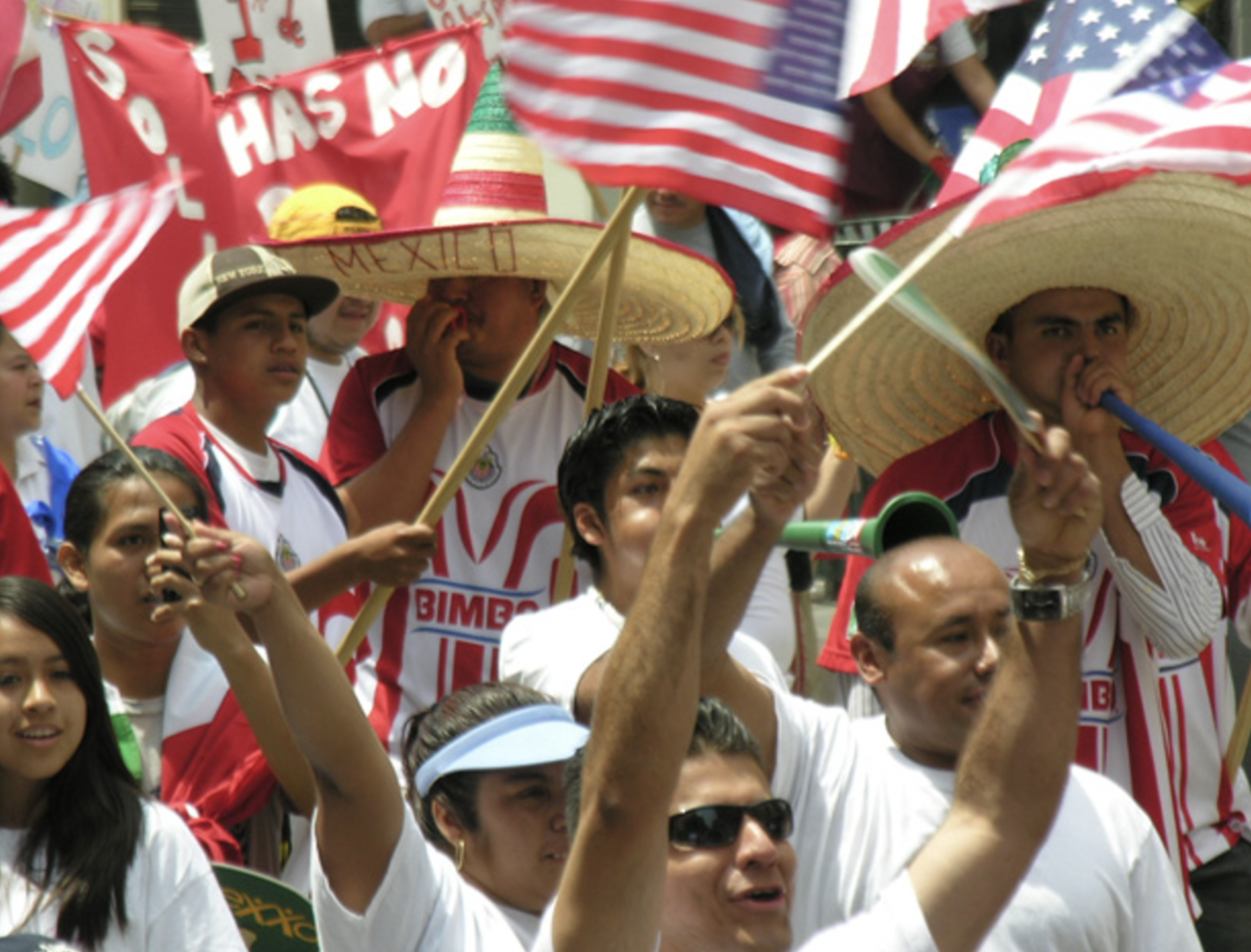
Thousands of people participated in seven May Day immigrant rights protest marches throughout the Los Angeles area in 2007.
On May 1st in 2007, in MacArthur Park in Los Angeles, as many as 10,000 people demonstrate for general amnesty for illegal immigrants. When the crowd grows and fills nearby streets, police presence swells and they demand the crowd to disperse. The crowd largely ignores the demand. Police form a line and advance to clear the park. Demonstrators who remain throw trash. Police fire foam rubber bullets. Dozens are injured and five people are arrested.
The LAPD is later found to have used excessive force. Many officers are punished and some are demoted. The department establishes a new Incident Management & Training Bureau.
16 days later, politicians and police participate in a rally and march protesting the police reaction to the MacArthur Park rally.