Ford Hunger March
March 7, 1932
Dearborn, MICHIGAN
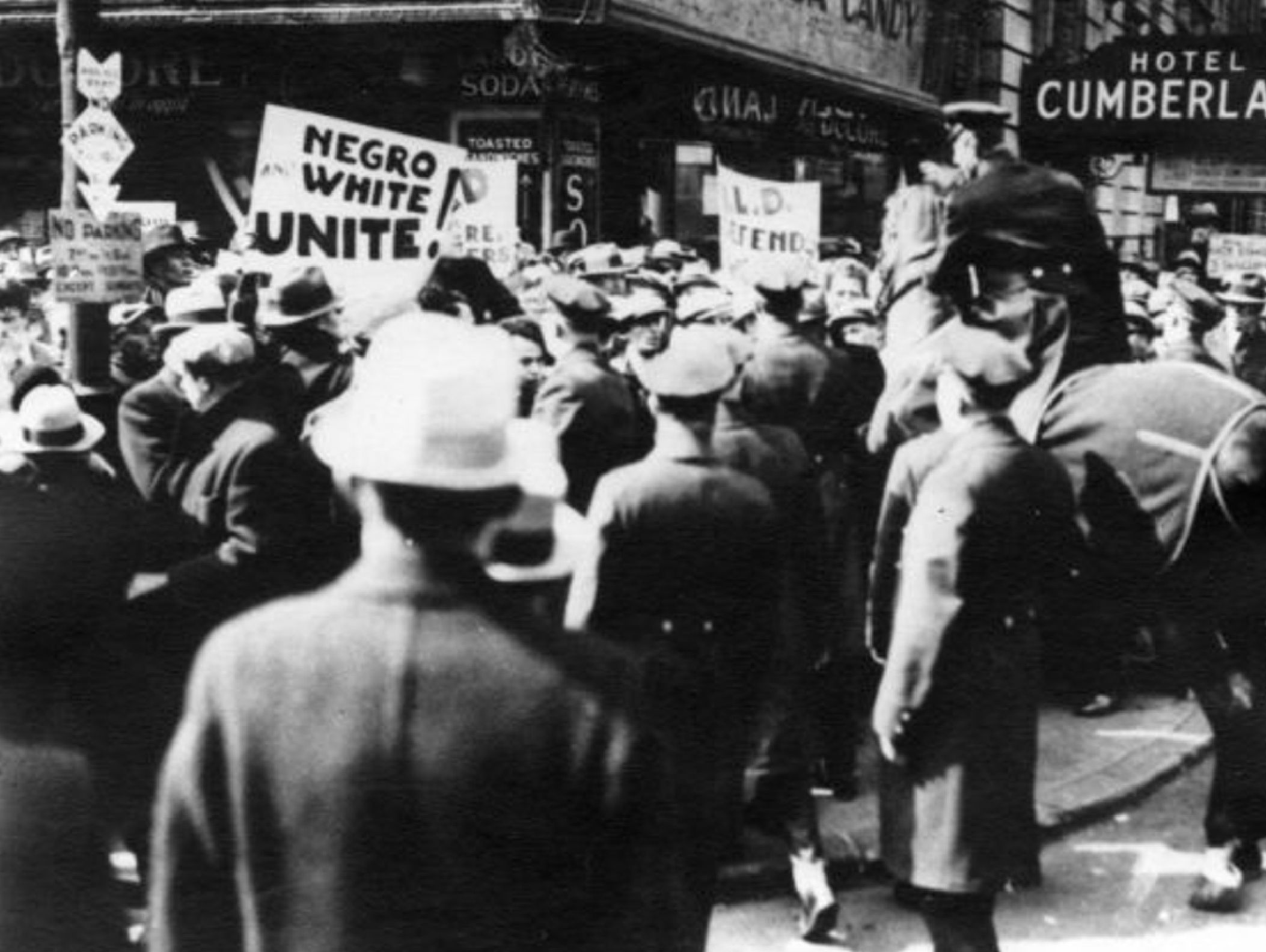
Photo from the 1932 Ford Hunger March massacre from the Walter P. Reuther Library.
On this day in 1932, at the height of the Great Depression, in frigid weather, 3000 to 5000 unemployed auto workers march on the Ford Motor Company’s sprawling River Rouge factory complex just outside Detroit, inspired by Communist speeches the day before. When police fire tear gas and guns, demonstrators begin throwing rocks. Fire hoses are turned on the marchers. Four workers are shot to death by police and security guards employed by Ford. More than 60 people, including 25 police, are injured. Hospitalized demonstrators are chained to their beds until the mayor of Detroit speaks out.
Henry Ford signs his first labor agreement with a union, the United Auto Workers, nine years later.
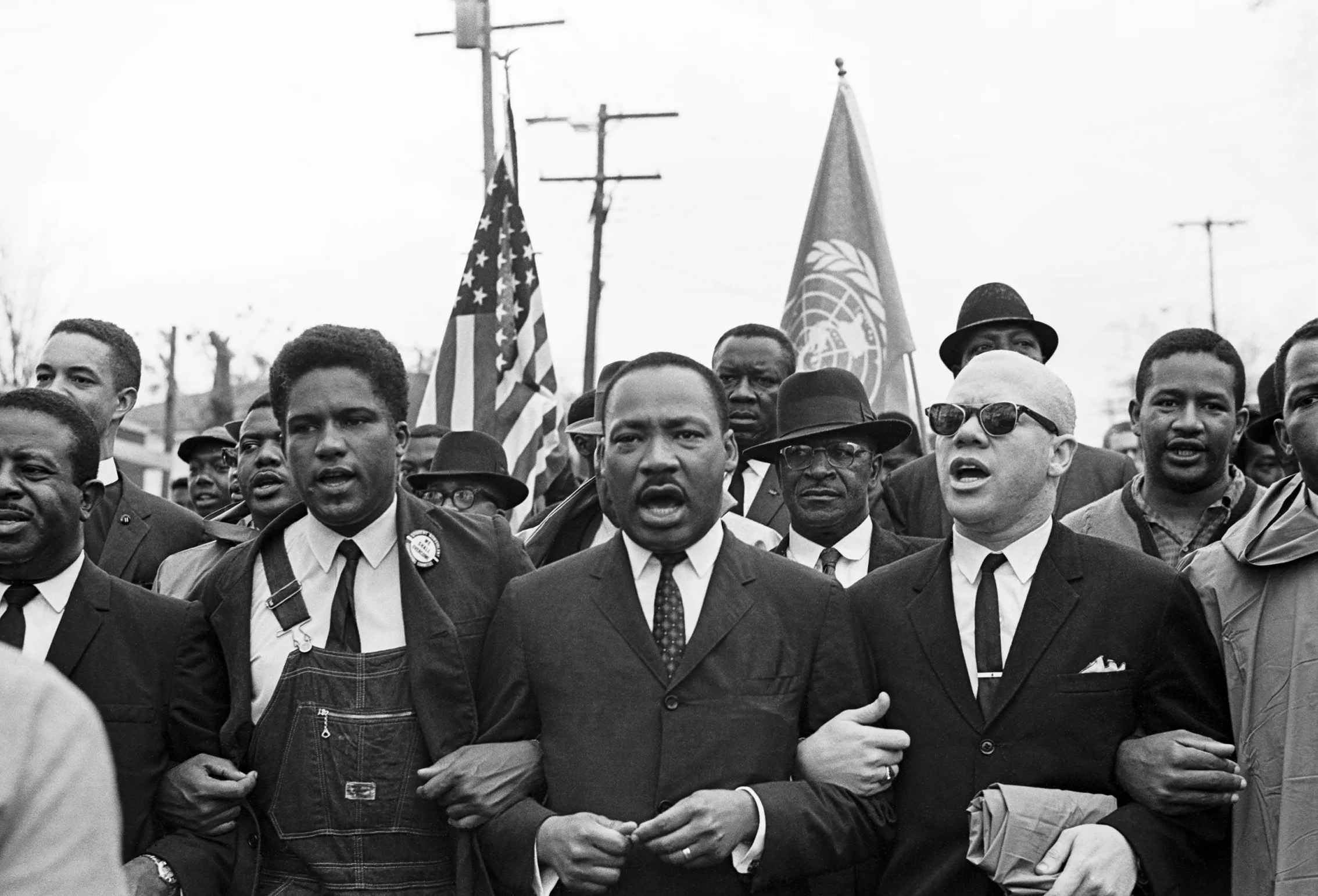
James Forman, Dr. Martin Luther King Jr. and Rev. Jess Douglas leading the march to Montgomery.
Selma to Montgomery marches
March 7, 1965
Selma to Montgomery, ALABAMA
In the 1960s, poll taxes, literacy tests, and outright intimidation kept Black Alabamans from voting — fewer than 5% of Blacks were registered in many majority Black counties.
On this day in 1965, 600 peaceful marchers set out from Selma toward Montgomery, the state capital, demanding voting rights. On their way out of Selma, on the Edmund Pettus Bridge crossing the Alabama River, they are charged at by a wall of state troopers and a sheriff's posse on horseback, armed with clubs and bullwhips. Law enforcement fires tear gas and beats men, women and children. Hundreds are injured; 17 will be hospitalized. Amelia Boynton Robinson is beaten unconscious; a photo of her body on the pavement runs on front pages worldwide. The event earns the name, “Bloody Sunday.”
With an escort of Alabama National Guard and federal troops, thousands of activists successfully march out of Selma two weeks later. Over five days of marching, their numbers grow to 25,000 people, peacefully reaching the Alabama State Capitol on March 25.
President Johnson addresses Congress eight days later, invoking the anthem, "We Shall Overcome." The Voting Rights Act passes five months later.